
A practical decision that can shape your first 2–5 years after high school
If you’re a high school student in or around Grand Island, Nebraska, the “welding apprenticeship vs trade school” choice can feel huge—because it is. I’ve learned that the best path isn’t about what sounds cooler. It’s about how you learn, how fast you want to earn, what kind of welding work you want to grow into, and what support you’ll have while you build real skills.
I’m writing this from a careers-first perspective: if you’re deciding what to do before graduation or right after, you want a path that gets you employable, confident, and safe on the job—without wasting time or money.
Apprenticeship vs trade school: what each one really looks like
| Category | Welding Apprenticeship | Welding Trade School |
|---|---|---|
| How you learn | On-the-job training + related classroom instruction (often nights/blocks) | Structured classes + shop labs, usually full-time |
| Pay while training | Typically, yes (earn while you learn) | Typically, no (you’re usually paying tuition) |
| Typical length | Often multi-year (commonly 3–5 years depending on program/union/employer) | Often months to ~2 years, depending on credentials and schedule |
| Best for | People who learn best by doing and want income ASAP | People who want a foundation across processes and a school pace |
| What can go wrong | If the shop’s work is narrow, you may not see many processes early | If you don’t practice enough outside class, confidence can lag on day 1 of work |
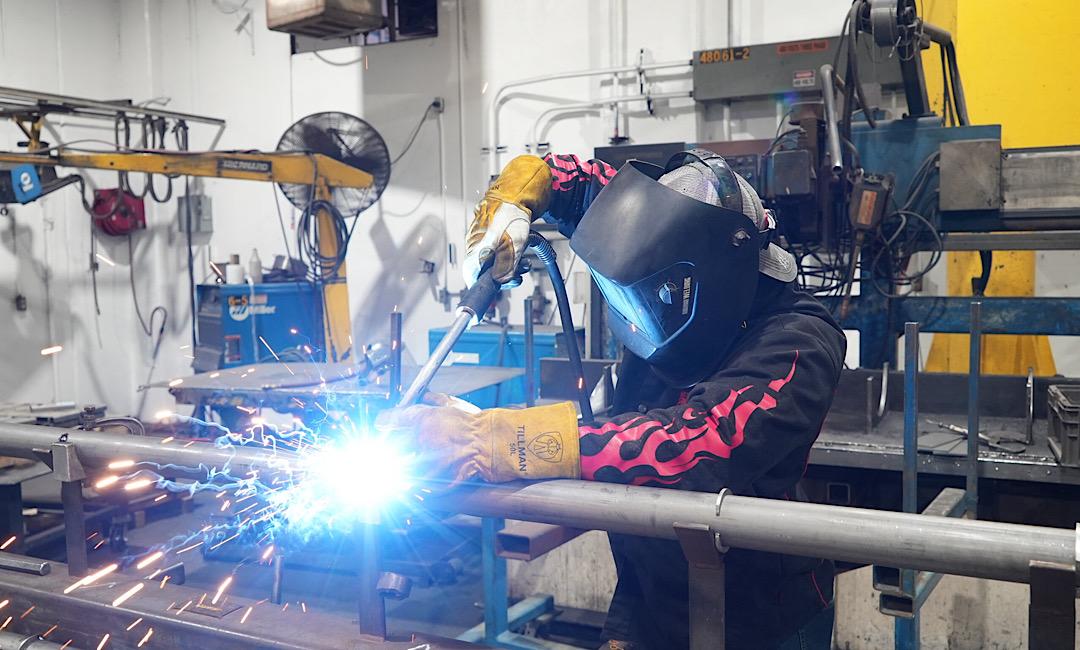
My rule: choose the environment that will keep you welding consistently. Skill comes from reps—hours under the hood, dialing in settings, fixing mistakes, and learning to read a weld.
Career reality check: what the job market says
Welding is a real, steady career path across manufacturing, construction, agriculture, and infrastructure. Nationally, the U.S. Bureau of Labor Statistics lists welders with a 2024 median pay and projects employment growth from 2024–2034 (growth is modest overall, but skilled welders continue to be needed across industries).
If you want to raise your ceiling, I pay attention to certifications and specialization—AWS notes that specialized certifications can improve salary potential and job stability.
Did you know? Quick facts I wish every high schooler heard
Registered Apprenticeship typically blends paid on-the-job training with technical instruction and has defined, industry-recognized requirements.
Many apprenticeships require a high school diploma (or GED)—so finishing strong matters.
Some Nebraska youth apprenticeship models can start around age 16 with certain conditions—meaning you may be able to explore pathways before graduation.
How I’d decide (step-by-step) before graduation
Step 1: Pick the kind of welding work you want to grow into
“Welding” can mean production welding, structural steel, custom fabrication, repair work, or specialized processes. If you like building big things that become part of a community (schools, hospitals, facilities), structural steel can be exciting. If you like precision parts and repeatability, fabrication/manufacturing is a great fit.
Tip: make a short list of 3 job titles you’d be proud to tell people you do, then work backward (skills, environment, schedule).
Step 2: Decide what matters more right now—time, money, or structure
| If you care most about… | I’d lean toward… | Why |
|---|---|---|
| Earning ASAP | Apprenticeship | You’re typically paid while learning on the job |
| A strong foundation across processes | Trade school (or a hybrid) | More structured exposure to theory, safety, and multiple processes early |
| A clear ladder + mentorship | Registered Apprenticeship | Defined competencies + on-the-job supervision + related instruction |
Step 3: Ask these 10 questions before you commit
The Grand Island angle: why manufacturing careers here can be a smart move
In central Nebraska, manufacturing and construction aren’t just “some jobs”—they’re career ecosystems. That matters when you’re starting out, because the fastest way to grow is to get into a place that has multiple departments, real mentorship, and a culture that treats trades as a long-term profession.
At Chief Industries (headquartered in Grand Island), the work spans fabrication, structural steel, metal building systems, powder coating, electrical services, and more—so I like the idea that a motivated new welder can build a path that keeps expanding instead of getting stuck. If you want to understand the bigger picture of what the company does, I’d start with the Products & Services page, then explore Our Brands to see the variety of work.
If welding is your focus, it’s also worth checking out Metal Fabrication and Structural Steel to see where welding skills show up in real projects.
CTA: If you’re exploring welding careers, I’d start a conversation early
Whether you choose an apprenticeship, a trade school, or a hybrid route, talking to a real employer about expectations is one of the fastest ways to get clarity. I’d ask about entry-level roles, training, and what a strong candidate looks like before I ever commit to a program.
FAQ: Welding apprenticeship vs trade school
Is an apprenticeship better than trade school for welding?
It depends on how you learn and what you need financially. If I needed income quickly and learned best by doing, I’d lean towards an apprenticeship. If I wanted a structured foundation across processes first, I’d lean trade school (or a hybrid where I work and train at the same time).
How long does it take to become a welder?
Many trade school paths can take months up to about two years. Apprenticeships are often longer (commonly a few years) because they combine job hours with technical instruction. The real milestone is: when can you pass a weld test and produce consistent, safe work under real deadlines.
Do I need certifications to get hired?
Not always for entry-level roles, but certifications can help you stand out and expand your options. AWS highlights that specialized certifications can improve salary potential and job stability.
What should I do in high school if I’m interested in welding?
I’d focus on attendance, shop classes if available, basic math/measurement, and showing I can work safely and consistently. Then I’d start informational conversations with employers about entry-level roles and training expectations. If youth apprenticeship options exist in your area, ask your school counselor or workforce office what’s available.
What’s a “Registered Apprenticeship” and why does it matter?
A Registered Apprenticeship is a structured model that combines supervised on-the-job training with technical instruction and defined competencies—so you’re not guessing what “good progress” looks like.
Glossary (quick, plain-English)
Apprenticeship: A training path where you learn on the job under supervision and usually complete related classroom instruction.
Registered Apprenticeship: An apprenticeship model with defined requirements/competencies and structured training components.
AWS (American Welding Society): A major industry organization with career resources and widely recognized welding certifications.
Blueprint reading: Understanding drawings/specs so you can build the right part, in the right place, with the right welds.
Weld test: A practical test where you weld a specified joint/process, and it’s evaluated to confirm you can meet a standard.
