
Thinking About a Career in Welding? Here’s Why Certifications Are Your Blueprint for Success.
If you enjoy hands-on work, have a sharp eye for detail, and want to build a career that’s both challenging and rewarding, welding could be the perfect path for you. After high school, you have a lot of choices. A career in the skilled trades, particularly welding, offers a direct route to financial stability and professional growth without the four-year university track. But to truly stand out and build a lasting career, it’s not just about knowing how to lay a bead—it’s about proving your skills through official certifications. Think of certifications as power-ups in your career journey, unlocking new levels, higher pay, and more exciting projects.
What Exactly IS a Welding Certification?
A welding certification is a professional credential that verifies a welder has the knowledge and skill to perform a specific type of weld according to an established standard. The most recognized organization for this in the United States is the American Welding Society (AWS). Getting certified is like earning a professional license. It tells employers that you’ve undergone rigorous testing and your work meets strict quality and safety criteria.
This isn’t just a piece of paper; it’s a testament to your capabilities. For companies like Chief Industries, where we build everything from massive structural steel frameworks to precise agricultural equipment, certified welders are essential. They are the backbone of our commitment to quality and durability.
Common Welding Certifications for Beginners
As you begin your journey, you’ll encounter various certifications. It might seem complex at first, but they are typically broken down by the welding process and the position in which you can weld. Here are a few you should know:
Certified Welder (CW)
The AWS Certified Welder program is the industry benchmark. It doesn’t require a specific training course; instead, it tests your ability to perform a quality weld following a detailed specification. Passing this exam demonstrates your mastery and opens doors at companies that demand high standards.
Process-Specific Certifications
Welding isn’t one-size-fits-all. Different materials and projects require different techniques. The most common processes you’ll learn are:
- SMAW (Shielded Metal Arc Welding): Often called “stick welding,” this is a versatile and widely used process, especially in construction and repair.
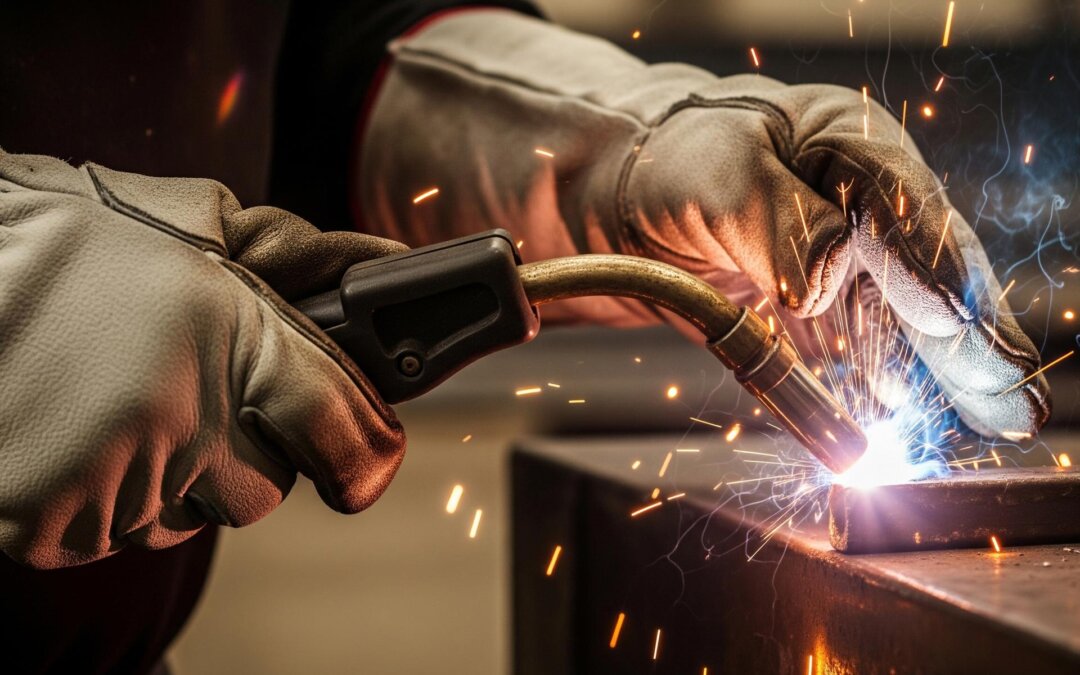
- GMAW (Gas Metal Arc Welding / MIG): MIG welding is like using a hot glue gun for metal. It uses a wire feeding gun and is common in manufacturing for its speed and efficiency, especially in our metal fabrication shops.
- GTAW (Gas Tungsten Arc Welding / TIG): TIG welding offers the most precision and control, producing clean, strong welds. It’s used for more intricate work on a variety of metals.
Positional Certifications (1G, 2G, 3G, 4G)
Welding on a flat tabletop is one thing, but real-world projects require welding vertically up a wall, horizontally across a beam, or even overhead. Positional certifications prove you can create sound welds in these challenging positions:
- 1G/1F: Flat position
- 2G/2F: Horizontal position
- 3G/3F: Vertical position
- 4G/4F: Overhead position
The more positions you’re certified in, the more versatile and valuable you become as a professional welder.
Your Path to a Welding Career After High School
Ready to get started? Here’s a straightforward path from high school graduation to a fulfilling career:
- Get Your Diploma or GED: This is the foundational first step for most professional training programs and employers.
- Find a Strong Training Program: Look into local community colleges (like Central Community College) or vocational schools that offer welding technology programs. These provide structured learning and hands-on practice.
- Practice Your Craft: The more time you spend “under the hood,” the better you’ll get. Focus on consistency, precision, and understanding the science behind the weld.
- Get Certified: Once you’ve honed your skills, take the certification tests for the processes and positions you’ve mastered. Start with one or two and build from there.
- Launch Your Career with a Great Employer: Look for companies that value skill, safety, and employee growth. A company with a strong company culture will invest in your continued training.
Build Your Welding Career in Grand Island, Nebraska
You don’t have to move across the country to find incredible career opportunities. Right here in Grand Island, Nebraska, Chief Industries has been a cornerstone of the manufacturing community since 1954. We are a family-owned company that believes in building from within and supporting our local talent.
A welding career at Chief means variety and stability. One day you could be working on components for industry-leading agricultural products, and the next you could be fabricating the steel skeleton for large-scale metal buildings. We offer a place where you can apply your certifications, learn new skills, and grow with a company that’s invested in your future. Explore our current openings in Grand Island and see how you can become part of our legacy.
Ready to Ignite Your Future?
A certification is your first step toward a successful, in-demand career. At Chief Industries, we’re looking for passionate individuals ready to build the future with us. We provide a supportive environment where your skills are valued and your growth is a priority.
Frequently Asked Questions
How long does it take to get a welding certification?
The timeline varies. A dedicated program at a technical college can take anywhere from 6 to 18 months. After training, you can take a certification test as soon as you feel prepared.
Do I need to go to college to be a welder?
You don’t need a four-year university degree. However, formal training through a vocational school or community college is highly recommended to learn the technical knowledge and gain the hands-on skills needed to pass certification exams.
What kind of welding does Chief Industries do?
Our diverse manufacturing portfolio requires various welding skills. We primarily use MIG (GMAW) welding for its efficiency in our steel fabrication processes for buildings, agricultural equipment, and other custom projects. We value welders with a strong, versatile skill set.
Is welding a dangerous job?
Welding has inherent risks, but modern safety standards, proper training, and the use of Personal Protective Equipment (PPE) make it a safe profession. Reputable employers like Chief Industries prioritize a safe working environment above all else.
What can I do to prepare for a welding career while still in high school?
Focus on math and science classes, especially geometry. If available, take shop classes like metalworking or industrial arts to get comfortable with tools and processes. Researching different welding techniques online can also give you a great head start.
Glossary of Terms
AWS (American Welding Society):
The leading non-profit organization that develops and publishes standards for welding and related joining disciplines.
SMAW (Shielded Metal Arc Welding):
A manual arc welding process that uses a consumable electrode coated in flux to lay the weld. Commonly known as “stick welding.”
GMAW / MIG (Gas Metal Arc Welding):
A welding process in which an electric arc forms between a consumable wire electrode and the workpiece metal, heating the workpiece metal and causing it to melt and join.
GTAW / TIG (Gas Tungsten Arc Welding):
An arc welding process that uses a non-consumable tungsten electrode to produce the weld. It is known for producing high-quality, precise welds.
