
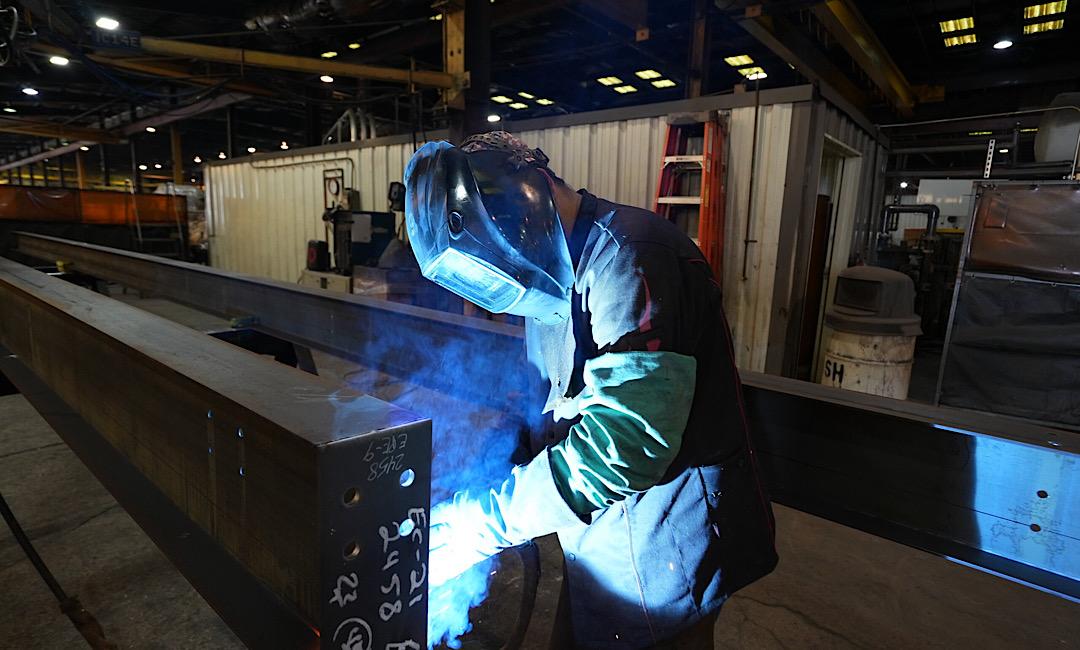
Not sure what you want to do after graduation? Manufacturing can be a smart first step.
If you like building, problem-solving, working with your hands, or learning tech that has real-world impact, manufacturing offers strong entry-level opportunities—often with paid training and clear paths to advancement. In Grand Island, Nebraska, manufacturing is more than “a job on the line.” It includes welding, metal fabrication, electrical work, quality control, logistics, and construction-related production that supports farms, cities, businesses, and communities.
What “manufacturing” really means (and why it fits so many personalities)
Modern manufacturing blends skilled trades with technology and teamwork. You’ll see people using precision tools, reading prints, running CNC equipment, welding structural components, maintaining automated systems, coordinating shipments, and inspecting finished work to meet code and customer requirements.
For high school students, that’s good news: you don’t have to have everything figured out on day one. Many roles let you start with the basics, get mentored, earn credentials, and specialize over time.
Career paths that start right after high school
Skilled trades (welding, fabrication, electrical, industrial maintenance) often offer faster ramps to steady pay than many entry-level office roles.
Production & operations roles can lead to lead/supervisor, scheduling, quality, or safety careers.
Construction-connected manufacturing supports metal buildings, structural steel, modular housing, and more—work that you can point to in your community.
Why welding is a standout option
Welding combines hands-on skill with real precision. It’s also a trade where “good fundamentals” show up in your work fast—your bead, your fit-up, your consistency.
Employers value welders who can produce clean, strong welds and recognize common weld defects early—before rework becomes expensive or schedules slip.
Quick breakdown: common weld defects (porosity & undercut) — and why they matter
Two weld issues show up often for beginners and experienced welders alike: porosity and undercut. Knowing what causes them (and how to prevent them) is a practical skill that helps you build quality—and your reputation.
| Defect | What it looks like | Common causes | Practical prevention |
|---|---|---|---|
| Porosity | Pinholes or “bubbles” trapped in the weld metal | Poor shielding gas coverage, leaks/drafts, contamination (oil/paint/rust), and moisture in consumables or on the base metal | Clean the joint, verify gas flow & nozzle distance, check hoses/fittings, keep consumables dry |
| Undercut | A groove at the toe of the weld where base metal is melted away and not filled | Travel speed too fast, heat input too high, poor technique/angle | Adjust speed/parameters, steady torch angle, allow the puddle to fill the edges (toes) |
These aren’t just “cosmetic.” Porosity can reduce weld integrity, and an undercut can weaken the joint where strength matters most—especially in structural or load-bearing applications.
Did you know? (Fast facts that help you plan)
Step-by-step: how to explore a manufacturing career before graduation
1) Pick a “starter skill” you can test quickly
Welding, electrical, fabrication, quality inspection, or logistics are all strong options. If you’re undecided, choose the one you’re most curious about. Curiosity is a real advantage because it keeps you learning.
2) Match your classes to the path
If your school offers Career & Technical Education, ask which classes connect to manufacturing and trades (welding, metals, drafting/CAD, industrial tech, construction). Nebraska’s Manufacturing career cluster resources can help you see how high school learning maps to real roles.
3) Build a simple “proof-of-skill” portfolio
For welding, that could be photos of practice coupons, notes about settings used, and what you changed when porosity/undercut showed up. For fabrication, it might be a measured part you built or a fixture you helped assemble. For electrical, it could be basic wiring labs and safety training.
4) Ask about paid work-based learning or youth apprenticeships
Paid apprenticeship opportunities (and partnerships with local education programs) are expanding in Nebraska. If you can earn while you learn, you reduce student debt risk and build job experience early.
5) Interview someone who works the job
Ask a welder, maintenance tech, or quality inspector what a normal day looks like, what mistakes rookies make, and what “good” performance looks like after 30/60/90 days. This one conversation can save you months of guessing.
Local angle: careers in and around Grand Island, Nebraska
Grand Island is a place where agriculture, construction, utilities, and manufacturing meet, so the skills you learn can transfer across industries. If you’re a student thinking, “I want something stable, but I also want options,” manufacturing can give you that flexibility.
At Chief Industries, that range of work can include metal fabrication, structural steel, metal building systems, electrical services, logistics, and more—meaning you can start in one area and grow into another as your interests develop.
Ready to talk through a career path?
FAQ: manufacturing careers for high school students
Do I need college to start in manufacturing?
Not always. Many roles start with on-the-job training, certifications, or apprenticeship-style learning. College can be helpful for certain paths (engineering, management), but it’s not the only route.
What’s a good first job if I’m interested in welding?
Many people start as a shop helper, trainee, or in an entry-level production role while building welding skills and learning safety, print reading, and measurement.
Why do welders talk so much about porosity and undercut?
Because they’re common, fixable issues that can weaken a weld. Porosity is often tied to shielding gas problems or contamination. Undercut is often tied to travel speed and heat input.
What classes should I take in high school for manufacturing?
If available, prioritize welding/metals, industrial tech, drafting/CAD, basic construction, and math that supports measurement and layout. Nebraska’s Manufacturing cluster guidance can help you map coursework to careers.
How can I stand out with no experience?
Show up consistently, take safety seriously, ask good questions, and document what you’re learning. A simple portfolio of practice work (with notes on what you improved) signals maturity and coachability.
Glossary (quick definitions)
Porosity: Gas pockets trapped in solidifying weld metal, often caused by shielding gas issues, contamination, or moisture.
Undercut: A groove along the weld toe where base metal has been melted away and not filled, commonly linked to travel speed and heat input.
Shielding gas: Gas used in processes like MIG/GMAW to protect the weld pool from air (oxygen/nitrogen) that can cause defects like porosity.
CTE (Career & Technical Education): High school and college programs that teach hands-on, job-ready skills aligned to career pathways such as manufacturing.
