
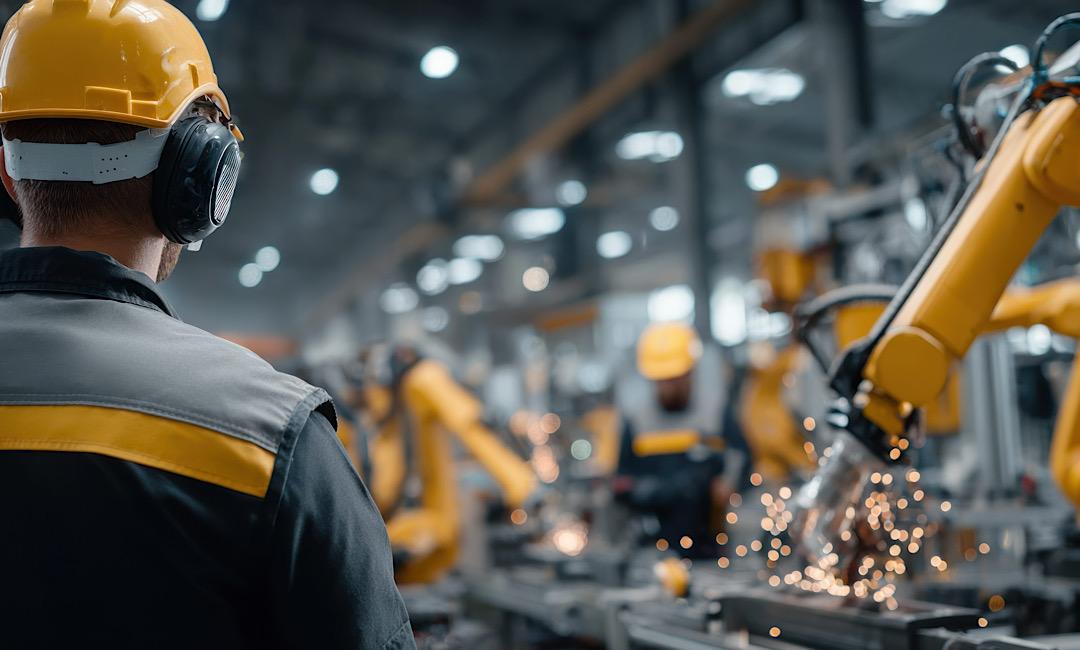
A hands-on career that mixes welding, robotics, and problem-solving
If you like building real things, want solid pay without waiting four years, and you’re curious about tech, a robotic welding operator job is worth a serious look. I think of it as the bridge between classic skilled trades and modern automation: you’re still working with metal and weld quality, but you’re also running automated cells, checking programs, and keeping production moving safely and consistently.
What a robotic welding operator actually does (day to day)
Job titles vary (robot weld operator, robotic welding operator, welding cell operator), but the core responsibilities are pretty consistent across manufacturers: operate the robot, verify weld quality, and handle the “small problems” before they become big downtime.
Typical responsibilities you’ll see on job postings
Where “operator” ends and “technician/programmer” begins
Many shops start you as an operator (run parts, inspect, maintain basics). If you enjoy troubleshooting, you can grow into set-up tech or programmer work—helping adjust weld parameters, improving fixtures, or supporting robot programming (often on common platforms like FANUC for arc welding).
The skills that make you stand out (even if you’re still in high school)
Can you notice when a clamp is loose, a part is warped, or a fixture is binding?
You don’t have to be a master, but you should understand what a good bead looks like and what common defects mean.
Robots repeat exactly what you set them up to do—so your consistency matters.
You’ll work with HMIs, barcode scanners, part counts, and sometimes robot teach pendants.
Being able to explain what changed (wire feed, fixture, material, gas flow, tip wear) is huge.
A simple path I’d recommend: from “interested” to “job-ready”
Step-by-step (high school to first job)
If you’re thinking about training after graduation
A short-term welding program or community college technical program can speed things up—especially if it includes MIG fundamentals and safety. Some schools also introduce automation concepts that translate well to robotic welding operator roles.
Safety matters more in robotic welding than most people realize
Robots don’t eliminate welding hazards—they change them. You still deal with arc flash, heat, sparks, and fumes, plus robot motion hazards (pinch/crush zones) and electrical systems.
Ventilation and welding fumes (what I pay attention to)
Good shops control welding fumes using local exhaust (fume extraction) and/or mechanical ventilation. OSHA guidance highlights local exhaust ventilation as an important control to reduce exposure.
If you tour a facility or interview, I’d look for fume extraction at the source, clean work areas, and a safety culture that encourages questions.
Quick comparison table: operator vs. technician vs. programmer
| Role | Main focus | What you’ll touch | Great fit if you like… |
|---|---|---|---|
| Robotic Welding Operator | Run production safely + consistent quality | Fixtures, parts, basic torch care, and an inspection | Hands-on work, routines, steady improvement |
| Robot Cell Technician | Troubleshoot downtime + improve cycle stability | Sensors, tooling, PMs, parameter adjustments | Problem-solving: “why did this change?” |
| Robotic Welding Programmer | Create/optimize weld programs + documentation | Teach pendant, software options, process tuning | Automation, precision, process engineering mindset |
Did you know?
Local angle: why Grand Island, Nebraska is a strong place to start
Grand Island sits in a region where manufacturing, ag-related equipment, construction supply chains, and transportation logistics all overlap. That matters because robotic welding isn’t a “one industry” skill—once you learn the fundamentals (setup, quality, and safe operation), you can apply it across multiple product lines and facilities.
If I were mapping out a career here, I’d look for employers that offer cross-training (welding + fabrication + maintenance basics) and clear advancement paths. At Chief Industries, I can also explore multiple manufacturing-adjacent brands and paths under one umbrella, which is ideal when you’re still figuring out what you like most.
Ready to ask questions or find the right fit?
If you’re a student (or a parent/guardian) and you want to understand which jobs match your interests—robotic welding operator, fabrication, production, maintenance, or skilled trades—I’m a big believer in starting with a simple conversation.
FAQ: Robotic welding operator careers
Do I need experience to get a robotic welding operator job?
Not always. Many employers hire entry-level candidates and train them on the specific cell. What helps most is reliability, basic mechanical aptitude, and willingness to learn.
Is robotic welding “just pushing a button”?
The start button is the easy part. The real value is setup accuracy, catching quality issues early, doing basic maintenance, and communicating what changed when welds drift.
What robots will I see in the real world?
It depends on the plant, but FANUC arc-welding robot families are common in U.S. manufacturing environments.
What’s the biggest safety issue new people underestimate?
Fumes and ventilation—plus how quickly a robot can move when you’re in or near the cell. Always follow training, PPE requirements, and keep guards/interlocks in place.
How can I grow from operator to a higher-skill role?
Ask to learn setups, get comfortable reading prints and inspecting, take on basic troubleshooting, and show that you can improve consistency. That’s often the pathway to technician and programming opportunities.
