
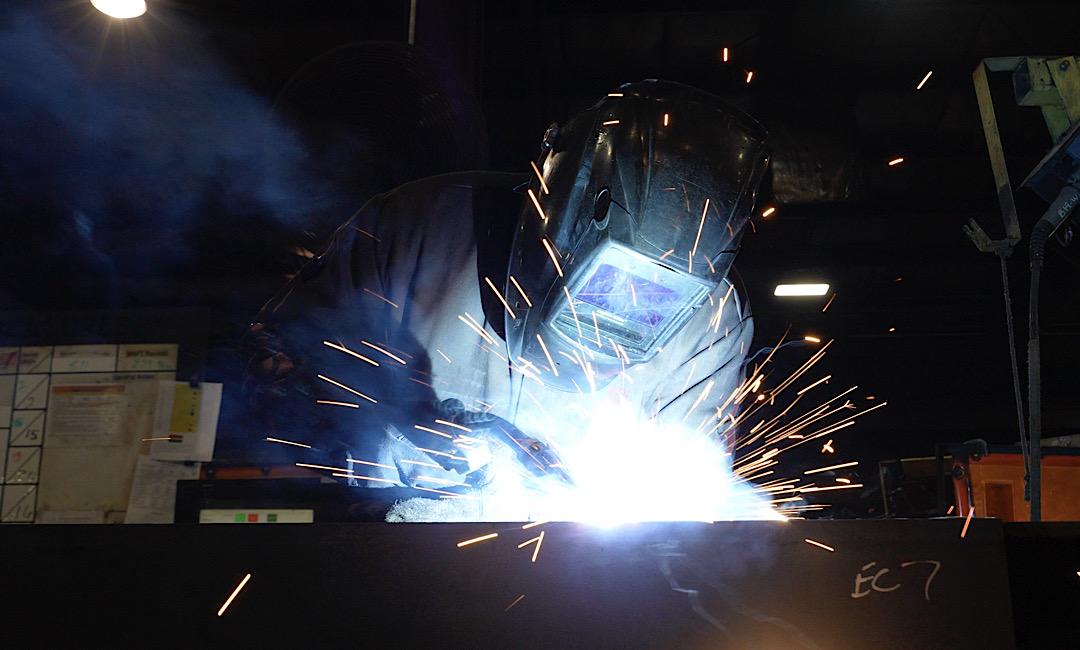
A practical guide to getting hired: what interviewers ask, what weld tests look like, and how to show up ready
If you’re a high school student in or around Grand Island, Nebraska, and you’re considering welding as a career path, you’re asking the right questions early. Welding interviews in manufacturing and fabrication often include two parts: (1) a conversation about safety, reliability, and basic knowledge, and (2) a hands-on weld test that proves you can run a consistent bead and follow instructions. This guide breaks down common welding interview questions, what a weld test typically involves, and how to prepare—without needing years of experience.
What employers are really checking in a welding interview
Even for entry-level roles, most hiring teams are looking for the same “big four” traits:
Safety habits (PPE, ventilation, fire prevention, awareness of fumes and hazards). OSHA has specific guidance and requirements for welding, including ventilation and respiratory protection considerations.
Coachability (you listen, you ask clarifying questions, you can follow a WPS-like set of instructions).
Consistency (steady travel speed, clean starts/stops, acceptable bead profile, basic defect avoidance).
Work ethic (showing up on time, handling feedback, being ready to learn).
Top welding interview questions (and what a strong answer sounds like)
1) “What welding processes have you used?”
Mention what you’ve actually done (MIG/GMAW, TIG/GTAW, Stick/SMAW, Flux-core/FCAW). If you’re new, say what you’ve practiced in class and what you’re most confident running.
Mention what you’ve actually done (MIG/GMAW, TIG/GTAW, Stick/SMAW, Flux-core/FCAW). If you’re new, say what you’ve practiced in class and what you’re most confident running.
2) “What safety equipment do you use, and why?”
Talk about helmets, gloves, jackets, safety glasses, hearing protection, and the importance of ventilation/fume control. OSHA notes welding fumes/gases and the role of local exhaust ventilation, plus special requirements in confined spaces.
Talk about helmets, gloves, jackets, safety glasses, hearing protection, and the importance of ventilation/fume control. OSHA notes welding fumes/gases and the role of local exhaust ventilation, plus special requirements in confined spaces.
3) “How do you set up a welder (basic steps)?”
Explain you check polarity, choose wire/rod type, confirm gas and flow (if applicable), clean the base metal, tack, and verify settings with a quick test bead on scrap.
Explain you check polarity, choose wire/rod type, confirm gas and flow (if applicable), clean the base metal, tack, and verify settings with a quick test bead on scrap.
4) “How do you prevent common weld defects?”
Name a few: porosity (clean metal, proper gas coverage), lack of fusion (correct heat and angle), undercut (control speed/heat), slag inclusions (good technique and cleaning between passes if needed).
Name a few: porosity (clean metal, proper gas coverage), lack of fusion (correct heat and angle), undercut (control speed/heat), slag inclusions (good technique and cleaning between passes if needed).
5) “Tell me about a time you messed up a project—what did you do next?”
Employers value honesty. A strong answer: you stopped, told the instructor/lead, reworked properly, and learned a repeatable check (fit-up, prep, parameters).
Employers value honesty. A strong answer: you stopped, told the instructor/lead, reworked properly, and learned a repeatable check (fit-up, prep, parameters).
6) “What would you do if you weren’t sure about an instruction?”
Say you ask before welding. That one sentence signals maturity and reduces scrap and safety incidents.
Say you ask before welding. That one sentence signals maturity and reduces scrap and safety incidents.
These are consistent with common interview guidance for welders: safety, process familiarity, and job readiness.
What a weld test typically includes (and what “passing” often means)
A weld test is usually done on a plate (flat bar/plate steel) for entry-level roles. Many shops start with something simple like a fillet weld (a “T-joint”), then move to a groove weld (butt joint) for more advanced qualifications. In structural environments, tests and acceptance can follow structural code practices (commonly associated with AWS D1.1 concepts), where visual inspection is a first gate, and then additional testing may be used (like bend testing or radiography, depending on the procedure).
Quick comparison: common entry-level weld test formats
Test type
What it checks
What to focus on
Fillet weld on a T-joint
Basic control, bead shape, tie-in at toes, consistency
Clean metal, steady travel, correct angle, avoid undercut
Groove weld (plate)
Penetration, fusion, multi-pass discipline
Fit-up, root control, interpass cleaning, consistent heat
Visual inspection + possible bend test
Surface quality first, then soundness through the joint
No visible cracks, good profile, follows directions precisely
Note: the exact coupon, position, and pass/fail criteria depend on the employer’s WPS and the job’s requirements. A common theme is: if the weld fails visual inspection, it often doesn’t move on to further testing.
Did you know? Quick facts that help you sound prepared
Welding fumes are a real exposure risk. OSHA highlights that ventilation and fume controls matter, and respiratory protection may be required depending on the work and environment.
Visual inspection is often the first “pass/fail” step. Many qualification approaches treat visual acceptance as a gate before bend tests or other evaluation methods.
Certifications can matter as you level up. The American Welding Society notes that specialized certifications can improve demand and stability—something to plan for after you get your first role.
Step-by-step: how to prepare for a weld test (even if you’re brand new)
1) Practice the “boring” skills that win tests
Most weld tests aren’t trying to trick you—they’re checking if you can repeat good basics. Spend time on: consistent stick-out (MIG), clean starts/stops, steady travel speed, and keeping the puddle in your sightline.
2) Learn to read the bead like a checklist
After each pass, pause and check: Are the toes tied in? Any undercut? Is it too convex (high) or too flat? Catching problems early shows self-inspection habits.
3) Treat safety as part of the test
Put on PPE without being asked. Ask where the fire extinguisher is. Confirm ventilation. OSHA guidance emphasizes fume controls and special precautions in confined spaces.
4) Ask two smart questions before you strike an arc
Keep it simple and professional:
“Which process and parameters do you want me to run for this test?”
“Do you prefer stringers or a slight weave on the cap?”
5) Show you can follow instructions under pressure
If the tester gives you a procedure (even verbally), repeat back the key points. This is a simple way to prevent mistakes and demonstrates job-site communication skills.
Tip: Many interview prep resources remind candidates that a weld test is common, so plan to show up ready to weld and dressed appropriately.
Local angle: getting started in Grand Island, Nebraska
Grand Island and Central Nebraska have strong career pathways in manufacturing, fabrication, construction, and ag-related industries—fields where welding skills transfer across structural steel, metal buildings, equipment manufacturing, and maintenance work. If you’re a high schooler planning your next step, consider building a simple plan:
Now: take shop classes, practice MIG fundamentals, and build safe habits.
Next 3–6 months: create a one-page resume that lists processes practiced, tools used, and any hands-on projects.
Before interviews: line up references (teacher, coach, part-time supervisor) who can speak to reliability.
If you’re exploring opportunities with Chief Industries, you can learn more about the company and its manufacturing-focused work, and keep an eye on roles that fit students and recent grads.
Ready to ask a question or explore welding career options?
If you’re still in school and want to understand what roles could fit your schedule, interests, and long-term goals, reach out. A quick conversation can help you map the next step—whether that’s entry-level production welding, fabrication support, or training pathways.
FAQ: welding interview questions & weld tests
Do I need years of experience to pass a weld test?
No. Entry-level tests often focus on fundamentals: safety, prep, consistency, and your ability to follow directions. Practice controlled beads and clean tie-ins.
No. Entry-level tests often focus on fundamentals: safety, prep, consistency, and your ability to follow directions. Practice controlled beads and clean tie-ins.
What should I bring to a welding interview?
A photo ID, your resume, any training records you have, and work-appropriate clothing. If you’re told there’s a weld test, show up ready to weld (closed-toe boots, long pants, and follow their PPE rules).
A photo ID, your resume, any training records you have, and work-appropriate clothing. If you’re told there’s a weld test, show up ready to weld (closed-toe boots, long pants, and follow their PPE rules).
What’s the #1 mistake people make on weld tests?
Rushing. Most preventable failures come from poor prep, ignoring instructions, or not checking the first bead before continuing.
Rushing. Most preventable failures come from poor prep, ignoring instructions, or not checking the first bead before continuing.
Will they inspect my welds, or cut them apart?
Many places start with visual inspection. Depending on the job, testing can include bend testing or other methods to confirm weld soundness.
Many places start with visual inspection. Depending on the job, testing can include bend testing or other methods to confirm weld soundness.
What safety topics should I be ready to talk about?
PPE, burns/eye protection, ventilation and fume control, and extra precautions for confined spaces. OSHA emphasizes these as key welding hazards to control.
PPE, burns/eye protection, ventilation and fume control, and extra precautions for confined spaces. OSHA emphasizes these as key welding hazards to control.
Glossary (quick definitions)
Weld test coupon: The metal pieces you weld during a test (plate or pipe) that get inspected and sometimes mechanically tested.
Visual inspection (VT): Checking the weld surface for issues like cracks, undercut, poor tie-in, or incomplete fill before any additional testing.
Bend test: A test where a sample is bent to reveal cracks or lack of fusion and confirm soundness through the weld.
Fillet weld: A weld used to join two surfaces at roughly a right angle (like a “T”).
WPS (Welding Procedure Specification): A set of instructions for how a weld is to be made (process, settings range, joint design, position, and more).
