
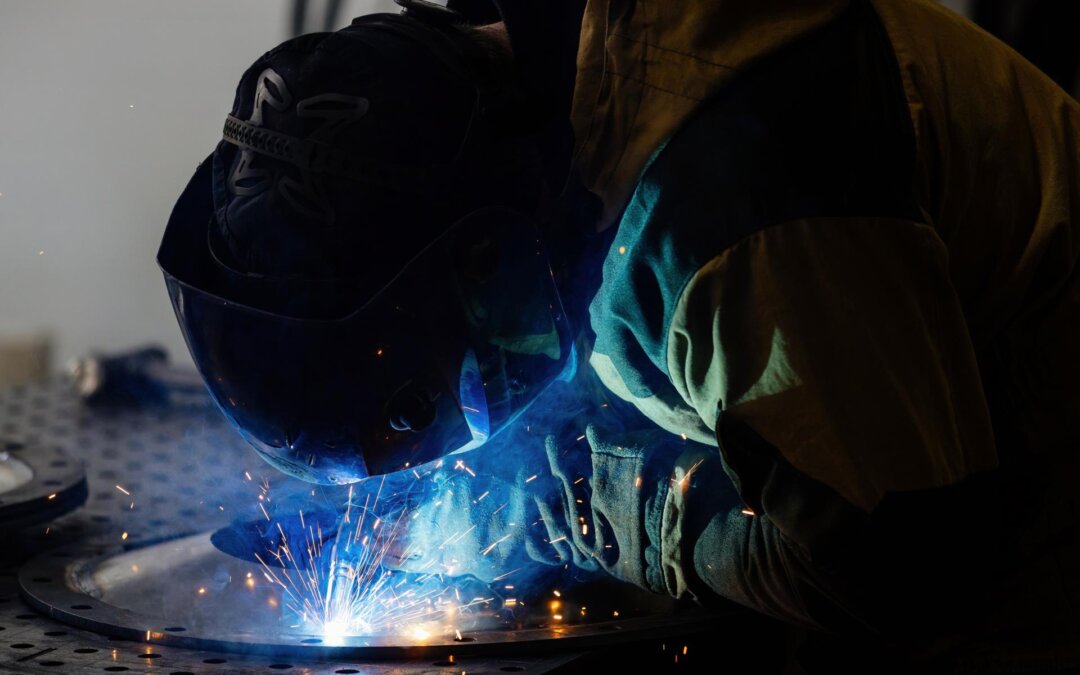
Forge a Strong Career Path Right After High School
Graduation is on the horizon, and you’re thinking about the future. If you enjoy hands-on work, have a steady hand, and take pride in building things that last, a career in welding might be the perfect fit. This isn’t just a job; it’s a skilled trade in high demand across the globe and right here in Nebraska. Welding is the backbone of modern manufacturing, construction, and agriculture, and mastering it opens doors to stable, rewarding careers. At Chief Industries, we know that skilled welders are essential to our success. This guide is designed to help you understand and prepare for two of the most common and critical welding certifications: the 3G and 4G tests. Passing these is your ticket to a promising future in the industry.
Understanding the 3G & 4G Welding Positions
In the world of welding, “G” refers to the groove weld test position. The number indicates the orientation of the metal plate and the direction of the weld. The 3G and 4G positions are challenging because they force you to work against gravity, requiring exceptional skill and control.
The 3G Welding Test: The Vertical Challenge
The 3G test requires you to perform a groove weld on a plate that is in a fixed vertical position. You will have to weld “uphill,” starting from the bottom and working your way up. This position tests your ability to control the molten weld puddle and prevent it from sagging or running down. Mastering the 3G position is crucial for fabricating large structures like metal buildings and structural steel components, which are core parts of our work at Chief Industries.
The 4G Welding Test: The Overhead Obstacle
Considered one of the more difficult positions, the 4G test involves welding a plate that is fixed in an overhead position. You will be welding from underneath, directly fighting gravity. This requires precise control of your travel speed, arc length, and electrode angle to ensure proper fusion and a sound weld. The 4G certification is highly valued because it demonstrates a welder’s ability to work in complex and demanding orientations, often required in equipment assembly and on-site construction.
Did You Know? Quick Facts About Welding
High Demand
The American Welding Society projects a significant shortage of skilled welders in the coming years, meaning excellent job security for those with the right certifications.
Diverse Industries
Certified welders work everywhere, from manufacturing floors and construction sites to motorsports and aerospace engineering.
Strong Earning Potential
Skilled welders with 3G and 4G certifications can earn competitive salaries, often with opportunities for overtime and advancement.
How to Prepare and Pass Your Welding Tests
Passing these tests comes down to preparation, practice, and precision. You can’t just walk in and expect to pass. Here’s a breakdown of the key areas to focus on.
1. Master the Fundamentals Before You Begin
Before tackling vertical and overhead welds, ensure your foundational skills are solid. This includes understanding welding safety protocols, knowing how to properly set up your machine (amperage, voltage, wire speed), and being able to read welding symbols on blueprints. A great weld starts with a great setup.
2. Tips for the 3G (Vertical Uphill) Test
- ✓ Proper Body Positioning: Get comfortable. You’ll be holding a position for a while, so brace yourself to maintain stability. You want your movement to be smooth and controlled, not shaky.
- ✓ Control Your Heat: Use the right amperage. Too hot, and the puddle will spill; too cold, and you won’t get proper fusion. Keep your arc length tight and consistent.
- ✓ Watch the Puddle: Focus on the sides of the weld joint. Pause slightly at the edges to allow the molten metal to fill in, ensuring a strong tie-in with the base metal. This prevents undercut.
- ✓ Practice, Practice, Practice: Run bead after bead on scrap metal until the technique feels natural. Practice your starts and stops, as these are critical areas inspectors check.
3. Conquering the 4G (Overhead) Test
- ✓ Defy Gravity: Keep a very tight arc length. This gives gravity less time to pull the molten metal away from the joint. A slightly faster travel speed than you’d use in other positions is often necessary.
- ✓ Electrode Angle is Key: Maintain a slight drag angle (about 5-10 degrees). This helps push the molten metal into the joint and creates a stable weld bead.
- ✓ Stay Clean: Before you run your final cap pass, make sure the previous passes are perfectly clean. Any slag left behind will cause inclusions and lead to a failed test.
- ✓ Protect Yourself: Overhead welding means more sparks and spatter falling down. Ensure your protective gear (jacket, gloves, and helmet) is in excellent condition.
Building Your Welding Career in Grand Island, Nebraska
Grand Island is a hub of manufacturing and agricultural innovation, and Chief Industries has been a cornerstone of this community for decades. We aren’t just one company; we are a family of specialized brands, each offering unique opportunities for skilled welders.
We believe in investing in our team, providing on-the-job training, and clear paths for advancement. We are looking for the next generation of talented, dedicated welders to grow with us. If you are a high school graduate from Grand Island, Kearney, Aurora, or the surrounding areas, we want to talk to you. Explore our available welding careers and see how you can become part of a company that is trusted, tested, and true, right here in your backyard. Learn more about opportunities at our Grand Island location.
Ready to Start Your Welding Career?
Your hard work and new certifications deserve a great home. Join a team where your skills are valued, and your potential is unlimited.
Frequently Asked Questions (FAQ)
Do I need a college degree to become a welder at Chief Industries?
No, a four-year college degree is not required. A high school diploma or GED, along with relevant technical training and certifications (like 3G and 4G), are the primary qualifications for our welding positions. We value hands-on skill and a strong work ethic.
What types of projects would I work on as a welder at Chief?
The projects are incredibly diverse! Depending on the brand you work with, you could be fabricating components for grain storage systems, creating large-scale metal buildings, or producing custom parts for industrial equipment. Your work will have a tangible impact across many sectors.
What’s the most common welding process used for these tests?
While tests can be administered for various processes, Shielded Metal Arc Welding (SMAW or “stick” welding) is very common for 3G and 4G structural certifications. Gas Metal Arc Welding (GMAW or “MIG”) is also widely used, especially in manufacturing environments. The specific process will depend on the test requirements.
How can I prepare for the visual inspection part of the test?
The visual inspection is critical. The inspector will look for a consistent bead width, uniform ripples, no undercut, and no surface cracks or porosity. Ensure your weld cap is smooth and well-fused into the base metal. Practice making your final pass look as clean and professional as possible.
Glossary of Welding Terms
- 3G Position: A welding test position where the test plate is fixed vertically, and the weld is performed in an uphill progression.
- 4G Position: A welding test position where the test plate is fixed in a horizontal plane above the welder, requiring an overhead weld.
- Amperage: The measurement of the flow of electric current, which controls the heat of the welding arc.
- Arc Length: The distance between the tip of the electrode and the weld puddle. A consistent arc length is vital for a quality weld.
- Groove Weld: A weld made in a groove or gap between two pieces of metal.
- Undercut: A groove melted into the base metal adjacent to the weld toe that is left unfilled by weld metal. It’s a common weld defect.
- Weld Puddle: The small pool of molten metal that forms during welding, which solidifies to form the weld bead.
