
A hands-on career where welding skill meets smart automation
I talk with a lot of high school students who want a “real job” after graduation—something practical, respected, and future-proof. Robotic welding is one of the best answers I’ve seen. It’s not “robots replacing welders.” It’s welders who know how to run and improve robotic weld cells, becoming the people every modern shop needs. Here in Grand Island, Nebraska, manufacturing and fabrication are a big deal, and that makes robotic welding careers especially relevant for students planning their next step.
What “robotic welding” actually means (and what you’d do on the job)
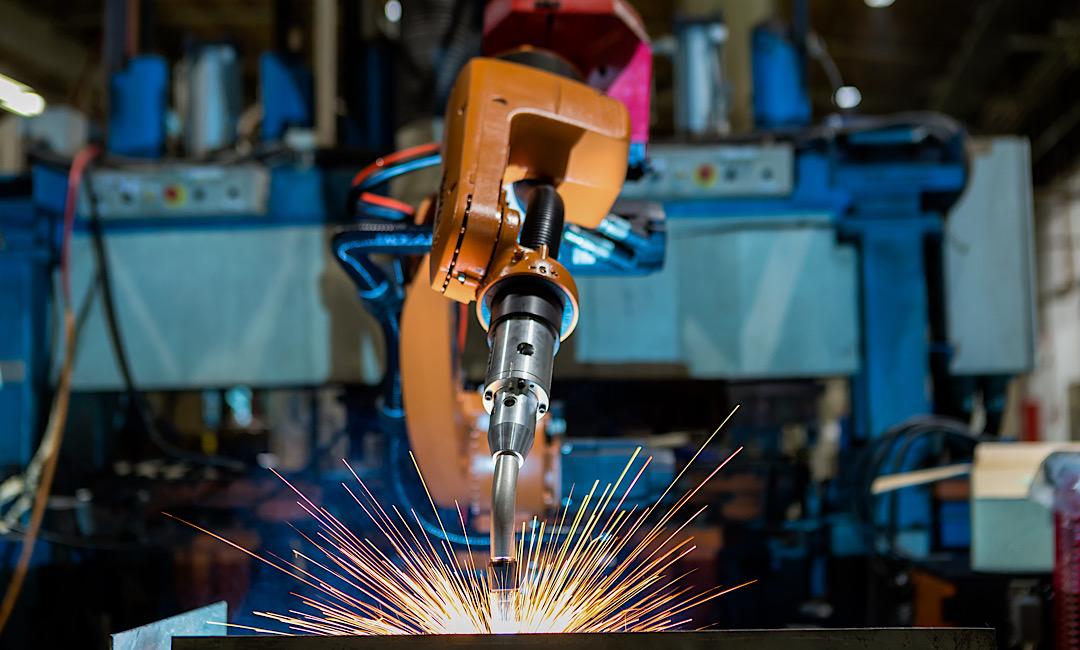
In most real manufacturing environments, a robotic welding setup is a work cell where a robot arm welds parts repeatedly with consistent speed and accuracy. The robot still needs a human operator/technician to keep production moving, maintain quality, and solve problems fast.
Common tasks in entry-level robotic welding roles
Many “robotic welder operator” job postings specifically list a high school diploma or equivalent as a baseline requirement, along with blueprint reading and basic welding knowledge.
My recommended high-school game plan (simple, realistic, and effective)
If you’re still in high school, your biggest advantage is time. Use it to build the “shop + tech” foundation that robotic welding rewards.
Checklist: what to prioritize before graduation
Nebraska’s Career & Technical Education pathways in Skilled & Technical Sciences and the Manufacturing cluster support welding and manufacturing coursework—exactly the kind of foundation that lines up with fabrication careers.
After graduation: 3 paths into robotic welding (pick what fits you)
| Path | Best for | What you build | Timeline |
|---|---|---|---|
| Start working + learn on the floor | Students who want pay + experience fast | Production habits, quality mindset, real-world troubleshooting | Weeks to start |
| Technical diploma/degree in welding | Students who want deeper welding skills + credentials | Weld processes, codes/standards awareness, blueprint reading | Months to 2 years |
| Add-on robotic training/cert | Welders/operators ready to level up | Robot setup, process control, basic programming & recovery | Short courses vary |
If you’re local, Central Community College lists Welding Technology program locations that include a Grand Island campus, which can be a practical step for students who want formal training close to home.
Credentials that matter in robotic welding (and when they’re worth it)
You don’t need a wall of certifications to start, but a few targeted credentials can help you stand out—especially once you’ve got some hands-on time.
AWS Certified Robotic Arc Welding (CRAW)
The American Welding Society (AWS) offers a Certified Robotic Arc Welding (CRAW) program designed to measure skills against industry standards. There are also role-focused credentials such as CRAW-Operator (CRAW-O).
Quick tip, I give students
If you’re choosing between “learn to weld better” and “learn to program robots,” I’d start with welding fundamentals first. In real shops, strong welding process knowledge makes you the person who can diagnose why a weld is failing—not just reset the robot.
Did you know? Quick facts that make robotic welding a smart bet
Local angle: why Grand Island is a strong place to start
Grand Island sits in a region where agriculture, construction, utilities, and manufacturing overlap—which means metalwork and fabrication skills stay relevant even when markets shift. If you’re a student here, you’re not choosing a “niche” career; you’re building a core skillset that can move across industries.
Where Chief Industries fits in
Chief Industries is headquartered in Grand Island and has dedicated welding career information on its site—helpful for students trying to understand what shop careers can look like locally.
CTA: I’m ready to explore robotic welding careers
If you’re a high school student (or parent/guardian) and you want to talk through welding and robotic welding opportunities at Chief Industries—what entry roles look like, what training helps, and how to apply—reach out. I’d rather you get clear answers early than guess your way into a career decision.
FAQ: Robotic welding careers for high school students
Do I need to know how to code to work in robotic welding?
Not to start. Entry roles focus on safe operation, quality checks, and keeping production running. As you grow, you can learn basic robot programming and troubleshooting—often taught on the job or through short courses.
Can I get hired right after high school?
Many robotic welder operator postings list a high school diploma/equivalent as a minimum, plus basic shop skills like blueprint reading and welding knowledge.
What classes help the most in high school?
Welding/shop, manufacturing, or skilled technical sciences courses, drafting/print reading, basic math, and any class that builds safety habits. Nebraska CTE pathways include welding and manufacturing options that align well with these roles.
Is “robotic welding” a dead-end job?
It can be a starting point or a long-term specialty. Many people move from operator to lead, trainer, quality, maintenance support, or robotic welding technician roles as they gain experience and build process knowledge.
Where can I learn more about welding jobs at Chief Industries?
I recommend starting with Chief Industries’ Welding Careers page, then checking local openings via the Careers section.
