
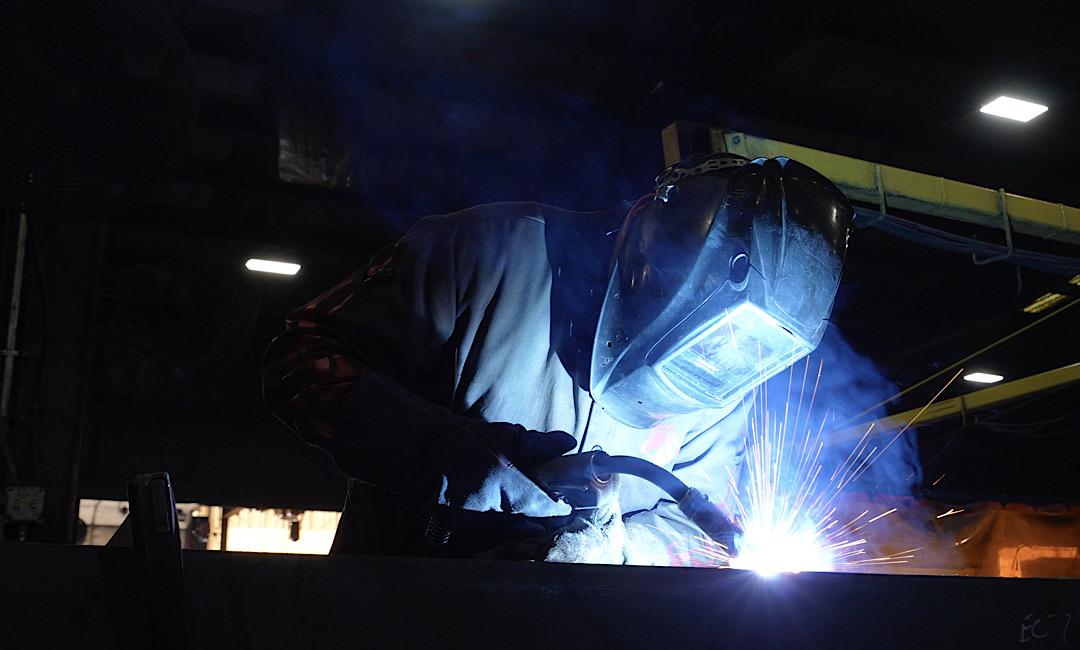
If you’re a high school student in or around Grand Island thinking about a welding career, I want to share something that doesn’t get enough attention in shop class: welding fume exposure safety. Welding is hands-on, high-skill work with real pride behind it—but the air you breathe during the job matters just as much as the bead you lay down.
A strong welding future starts with smart habits—especially your breathing zone
I’ve watched plenty of new welders focus on helmets, gloves, and boots (all important) while ignoring the “invisible” hazard: fumes. Whether you’re welding mild steel, galvanized material, or stainless, fumes can contain particles and gases that can irritate your lungs now—and create bigger problems later. The goal isn’t fear; it’s awareness and control.
What are welding fumes (and why do they matter)?
Welding fumes are a mix of ultra-fine metal particles and gases created when the arc heats base metal, filler metal, and coatings. What’s in the fume depends on the process (MIG, TIG, stick, flux-core), the metal (carbon steel vs. stainless), and coatings (like zinc on galvanized steel).
If those numbers feel abstract, here’s the practical takeaway: you can’t judge exposure by smell alone. Some high-risk components (like Cr(VI)) can matter at very low levels.
Sub-topic: what “good ventilation” actually means for a new welder
A fan in the corner isn’t the same as fume control. What I look for is whether the shop uses controls that capture fumes at the source or keep them out of the welder’s breathing zone.
| Control Type | What It Looks Like | Why It Helps | Best For |
|---|---|---|---|
| Local Exhaust Ventilation (LEV) | Fume arms, portable extractors close to the weld | Captures fume near the source before it reaches your face | Most indoor welding stations |
| General (dilution) ventilation | Air movement through the building (HVAC/exhaust) | Reduces background haze, but may not protect your breathing zone | Supportive measure, not a stand-alone solution |
| Respiratory protection (when required) | Half-mask or PAPRs are used under a written program | Adds a protection layer when engineering controls aren’t enough | Certain materials, confined areas, and high-fume jobs |
NIOSH has documented that local exhaust ventilation can significantly reduce welding fume concentrations, especially when positioned correctly.
Quick “Did you know?” fume safety facts
Step-by-step: how I evaluate a welding job for fume safety (as a student or new hire)
If you’re touring a shop, interviewing, or starting your first welding job, these are the questions I’d use to protect my future self. You don’t need to sound like a safety engineer—just be curious and professional.
1) I ask what materials I’ll weld most often
Mild steel, stainless, galvanized, and painted steel—each changes fume risks. Stainless work can raise Cr(VI) concerns; galvanized coatings can create irritating fumes and require strong controls.
2) I look for local exhaust ventilation at the station
I’m looking for a fume extraction that’s close enough to actually capture the plume (not just a ceiling fan). If the shop can show how they position extractors to pull fume away from the breathing zone, that’s a good sign.
3) I ask whether air monitoring is done for welding fume metals
Serious employers verify controls by measuring exposure. I don’t need all the details, but I do want to know it’s not guesswork—especially for manganese and Cr(VI).
4) I confirm respirators are handled the right way (if they’re needed)
If respirators are part of the job, I ask: “Is there a written respirator program and fit-testing?” That’s not being difficult—OSHA expects respiratory protection to be managed correctly when used to control exposure.
5) I pay attention to training and supervision for new welders
The best shops don’t just say “wear PPE.” They show you how to set up extraction, how to avoid welding with your head in the plume, and how to recognize when a process/material needs extra controls.
How this connects to real careers at Chief Industries
One reason I like talking about this in Grand Island is that manufacturing and construction are a big deal here—and there are multiple paths that can start with welding skills: fabrication, structural steel work, and metal building components, to name a few.
If you’re still figuring out what “lane” you’re in, browsing different departments can help you see how welding connects to larger manufacturing systems. Our Brands
Local angle: why Grand Island welders should care about indoor air in winter
Here in Nebraska, winter can mean more doors closed, less natural airflow, and more welding happening indoors with the shop trying to keep heat in. That’s exactly when source capture (LEV) and smart station setup matter most—because “we’ll just open a bay door” isn’t always realistic.
If you ever end up in a role where you help improve safety (team lead, supervisor, project manager), Nebraska also has an On-Site Safety and Health Consultation Program that helps employers identify and correct hazards, including evaluating ventilation systems.
CTA: Want help finding the right first job path?
If you’re a high school student exploring welding careers—or a parent/teacher helping someone plan their next step—I recommend reaching out and asking what entry-level roles, training, and growth paths look like.
